

Author Batya Greenwald, Transformative Parent and Life Coach
When our teens make choices that scare us, fear can make control feel like good parenting. In this personal reflection, Batya explores how to balance safety and accountability with self-awareness, curiosity, and connection. She shares a powerful reminder that we can hold clear boundaries while keeping the door open, listening, changing our minds, and repairing when we get it wrong.
There are moments in parenting when everything we believe gets put to the test.
When my daughters were teenagers, one of my guiding parenting principles was simple: Safety first.
I wanted my girls to know that no matter what time it was, no matter what they had done, and no matter how disappointed or angry I might be, I would always rather get a phone call in the middle of the night than have them try to handle an unsafe situation alone. Then one night, that principle was put to the test.
One of my daughters missed curfew. Soon after, a friend called to say that our daughter was drunk and had asked her to call us.
I was so grateful she had.
I climbed out of bed and went to pick her up, reminding myself to stay calm. But once she was safely in the car, I had so many questions. Why was she drinking? Where did they get the alcohol? Where were the parents?
She was protective of her friends and wasn’t answering any of my questions.
After getting her safely into bed, my husband and I stayed up to strategize. Along with our anger, another feeling began to take over. Fear.
We were frightened by what could have happened. We worried about why she had made the choices she had made. And, like many parents, our fear quickly turned into a powerful desire to take control. We wanted to make sure this never happened again.
So we decided to ground her for two weeks, which meant she would miss something very important to her: a special party she had been looking forward to.
At the time, the consequence felt justified. She had broken curfew. She had been drinking. Rules we had as a family had been broken. This was serious.
But then I began to notice something. She was angry and withdrawn. She felt we were being unfair. And she kept asking us to reconsider.
I held firm. At the time, I thought being a good parent meant standing by the decision I had made. But looking back, I can see something else was happening…changing my mind felt dangerous.
Fear Can Make Control Feel Like Good Parenting
When our children make choices that frighten us, it can be hard to separate what is actually happening from everything we fear might happen next.
Our minds can quickly go to:
- What if this happens again?
- What if next time something terrible happens?
- What don’t I know?
- How can I make sure this never happens again?
When we are anxious, control can feel like good parenting. We may lecture, tighten the rules, hand out consequences quickly, or shut down the conversation. We may convince ourselves that if we are firm enough, our children will understand how serious the situation is.
Sometimes boundaries and consequences are absolutely necessary. But anxiety can also make us want to regain control before we have fully understood what happened.
That was the lesson I had to learn.
I eventually realized that my daughter’s anger wasn’t actually my biggest concern. My bigger concern was what our response might teach her about the future.
Would she call us the next time? Or would she decide that telling the truth was simply too costly?
That question changed everything for me: Will the way I respond today make it more or less likely that my child will come to me tomorrow?
A Simple Framework: Safety. Self-Awareness. Connection. Accountability.
When your child has made a risky decision, everything does not have to be solved in the same moment.
1. Safety First
Before anything else, ask: Is my child safe? Is anyone else in danger? What needs to happen right now?
In the middle of a crisis, you don’t need to decide on consequences. Focus first on getting your child home, getting help if needed, and making sure everyone is safe. A child who calls for help needs to know that asking for help was the right decision. The rest can be dealt with later.
2. Check Your Own Anxiety
Once the immediate danger has passed, pause before deciding what comes next. Ask yourself:
- What am I feeling right now?
- What am I afraid of?
- Is my fear helping me make a thoughtful decision—or making me want to regain control?
Fear is a normal part of parenting. Especially as our children become teenagers and begin to move further into the world, we cannot control everything that happens to them. But when we don’t recognize our anxiety, it can quietly make decisions for us. Sometimes the consequence we choose is less about helping our child learn and more about helping us feel temporarily less afraid. That was certainly true for me.
3. Stay Connected and Stay Curious
Being connected does not mean approving of your child’s behavior. It means staying open long enough to understand.
There is a difference between being firm and being closed. Being firm means holding boundaries thoughtfully. Being closed means refusing to listen because we are afraid that our child’s perspective—or new information—might cause us to reconsider.
I eventually realized that my daughter’s repeated requests about the party were an invitation to a deeper conversation. Instead of hearing her as nagging, I began to wonder what might happen if I listened.
4. Accountability After Understanding
A few days after the incident, when everyone was calmer, we went back to the conversation. I asked the questions she had been in no shape to answer that night, when she was scared, defensive, and not thinking clearly.
- What happened?
- What was going on for you that night?
- What made it difficult to make a different choice?
- What could you do differently next time?
- How can we make sure you will call us if you ever find yourself in an unsafe situation again?
These questions didn’t excuse her behavior. They helped us understand it and communicated something equally important: that her experience and inner life mattered to us.
Understanding is often where the most important parenting conversations begin. And we listened.
We listened to her explanations, to her thinking, and to the way she was trying to make sense of what had happened. Then we asked her what she thought the right consequence should be.
She immediately said that she agreed with being grounded. She understood that there needed to be a consequence and actually liked the idea that being home was “grounding” for her. But she asked if that one special night could be an exception.
Of course, she wanted to go to the party. But she also wanted the opportunity to prove—to herself and to us—that she could be around alcohol without participating.
My husband and I talked about it. And we changed our minds.
The Power of Going Back and Repairing
Before we changed our minds, I had to make my own repair…I apologized.
I told my daughter that I had been frightened and that my fear had influenced the way I responded. I acknowledged that I hadn’t listened well and that I had shut down the conversation because I was afraid of changing my mind.
Changing our minds didn’t mean that her behavior was suddenly acceptable. It didn’t mean that she had “won” and we had lost. It meant that we had listened.
We had heard something we hadn’t understood before and were willing to let that understanding influence our decision.
One of the most powerful things we can model for our children is that repair is possible. We can make a parenting decision and later realize that we got it wrong. We can apologize, listen again, and change our minds. Our authority is not weakened when we do this. Often, trust is strengthened.
What This Can Sound Like at Home
Imagine your teenager calls you late at night because they have been drinking and don’t feel safe driving home.
Instead of beginning with “You are in so much trouble.” — you might start with: “I’m glad you called me. Right now, we’re going to focus on getting you home safely. We can talk about everything else tomorrow.”
The next day, you might say: “I’m still worried about what happened, and we are going to talk about it. But before we decide what happens next, I want to understand your experience. Help me understand what happened.”
And if your child keeps asking you to reconsider a decision, you may respond: “I know this is important to you. I can’t promise that my decision will change, but I am willing to listen.”
Listening doesn’t mean giving in. But it does mean being open to learning something you didn’t know before. And sometimes, that learning may change your mind.
A Reflection Question for Parents
The next time your child does something that frightens, disappoints, or angers you, pause before deciding what needs to happen next. Ask yourself:
- What am I most afraid of right now?
- Am I responding to my child—or am I responding to my fear?
- Will the way I respond today make it more or less likely that my child will come to me tomorrow?
Closing Encouragement
Looking back, I don’t wish I had been less concerned about my daughter’s behavior. I was her parent, and of course I was worried. What I wish is that I had understood sooner that fear doesn’t always make us wiser. Sometimes fear makes us tighter. More controlling. Less curious. Less willing to listen.
Parenting teenagers asks us to hold two things at once: clear boundaries and an open door. Our children need to know that their choices matter and that we will hold them accountable.
But they also need to know: You can always call me. You can tell me the truth. You may not like my response, and we may have difficult conversations, but your safety will come first.
And perhaps most importantly: Even when I don’t get it right, I am willing to come back, listen again, and repair.
We don’t have to be perfect parents to build strong relationships with our children. We simply have to keep practicing the courage to stay present, stay curious, and keep the door open.
Batya Greenwald is a transformative parent and life coach with more than 30 years of experience helping children, parents, and individuals navigate life’s biggest challenges and transitions. After 27 years as an educator, she transitioned into coaching, combining behavioral, cognitive, and awareness-based approaches to help people unlock resilience, strengthen relationships, and live with greater purpose.
“I support parents and individuals to navigate challenges, unlock their potential, and create a life filled with purpose and fulfillment.”
Born in South Africa, shaped by years in Australia, and now based in Boulder, Colorado, Batya brings a global perspective and deep compassion to every conversation. She holds a B.A. in Psychology, an M.A. in Education, and a certificate in Integrative Coaching. She serves on faculty for PassageWorks and Girls Leadership, is a TEDx speaker, and received the 2023 Impact on Education Award.
Learn more about Batya and find additional resources at https://www.batyagreenwaldcoaching.com/
Listen to her Tedx Talk at: What Kindergarteners Taught me about Gender

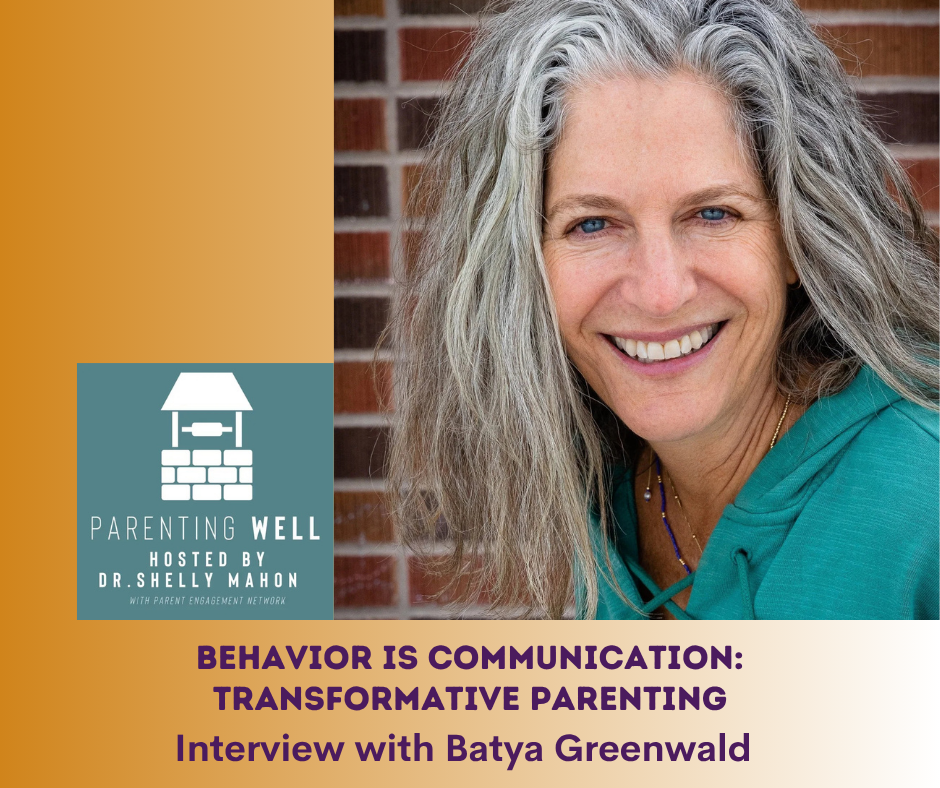
Batya recently joined Dr. Shelly Mahon for a Parenting Well Podcast: Behavior is Communication: Transformative Parenting
“Parents, I love you. I feel you. It is something to navigate these waters of parenting. It’s not for the faint of heart, and we are thrown into it.”